Brow lamination vs microblading: the honest verdict
If you want fuller looking brows for a few weeks with no needles and no commitment, brow lamination usually suits you. If you have sparse brows and want a semi-permanent shape that lasts a year or more, microblading is the better fit. There is no single right answer, and the best choice depends on your natural hair, your skin and how much upkeep you want, which is exactly what we talk through in a consultation.
Choosing between brow lamination and microblading comes down to what your brows are doing now and how hands-on you want to be. Both are designed to give you a groomed, fuller looking brow, but they work in completely different ways. One reshapes the hair you already have. The other adds the look of hair where there is none.
Below we set the two side by side, honestly, the way Linda would walk you through it in the treatment room. Results vary from person to person, so treat this as a guide rather than a promise, and use it to arrive at your consultation with better questions.
Brow lamination vs microblading at a glance
Here is the quick comparison. Read down the column that matches what you care about most, whether that is longevity, upkeep or how natural it looks.
| What matters to you | Brow lamination | Microblading |
|---|---|---|
| What it does | Softens and resets your own brow hairs so they sit fuller and brushed up | Deposits pigment into the upper skin to mimic individual hair strokes |
| Needles involved | No | Yes, a fine hand tool |
| How long it lasts | Around 4 to 6 weeks | Around 12 to 18 months, then a top up |
| Best for | Brows with enough hair that just will not sit right | Sparse, patchy or over-plucked brows |
| Time in the chair | Roughly 45 to 60 minutes | Roughly 2 to 3 hours across two visits |
| Downtime | Minimal, keep them dry for 24 hours | A healing period of 7 to 14 days |
| Commitment level | Low, it grows out gently | High, it is semi-permanent |
| Upkeep | Re-lamination every 4 to 6 weeks if you love it | A colour top up roughly once a year |
Brow lamination: what it is and who it suits
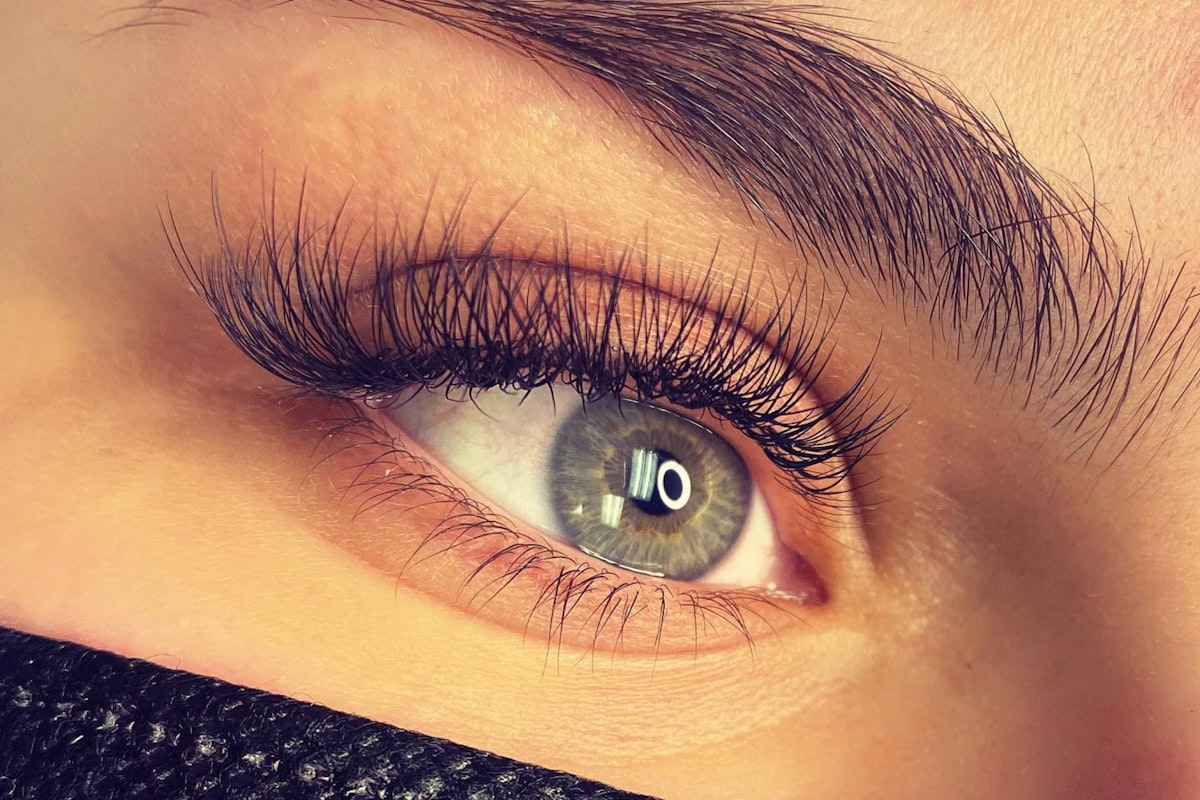
Brow lamination is a treatment that softens your natural brow hairs so they can be brushed into a fuller, more uniform shape and set there for several weeks. Think of it as a relaxing and reshaping of the hair you already have, no colour is added to the skin and nothing is permanent.
The process uses a gentle solution to soften the hair, a second to reset it in the new direction, and usually a nourishing step to condition the brows afterwards. Many clients pair it with a tint and a tidy so the shape, colour and grooming all land together.
It tends to suit you if your brows have decent density but grow in different directions, sit flat, or have gaps that close up once the hairs are brushed upward. If you have unruly hairs that never quite behave, lamination is designed to bring them into line.
The trade-offs are honest ones. It is temporary, so you are back roughly every 4 to 6 weeks if you want to maintain the look. The softening solutions are strong, so on very fine or already stressed hair we sometimes suggest waiting or starting gently. And because it works with your existing hair, it cannot fill a genuinely bare patch. That is where microblading comes in.
Microblading: what it is and who it suits
Microblading is a semi-permanent tattooing technique where a technician uses a fine hand tool to deposit pigment into the upper layer of the skin in tiny strokes that mimic real brow hairs. It is designed to create the look of fuller, defined brows that last for a year or more before fading.
Because pigment is placed in the skin, the result is far longer lasting than lamination, and it can genuinely rebuild the appearance of a brow that is sparse, patchy or has been over-plucked over the years. Most work is done across two appointments, an initial session and a top up around six weeks later once you see how your skin has held the colour.
It suits you if you want to wake up with a shape already there, if makeup no longer covers the gaps, or if thin brows are something you have lived with for a long time. The pay-off is real, but so is the commitment.
The trade-offs matter. It is semi-permanent, so the shape and colour need to be right before you commit. There is a genuine healing period of a week or two, results and fading vary a lot with skin type and lifestyle, and it is not suitable for everyone. Microblading is a cosmetic tattoo, so in New South Wales it must be carried out by a licensed technician in premises that meet the local skin penetration health requirements. Skin Essentials focuses on skin, lash and brow care rather than cosmetic tattooing, so this is one we will always talk through honestly and refer where it is the right call.
Which is right for you?
Here is the simple if/then version to help you decide, though the real answer always starts with a proper look at your brows.
- If your brows have enough hair but sit flat or grow every which way, then brow lamination is usually the place to start.
- If your brows are sparse, patchy or over-plucked and you want a lasting shape, then microblading is worth exploring with a licensed cosmetic tattoo technician.
- If you are needle-shy or want to test a fuller look before anything permanent, then lamination lets you try the effect with zero long-term commitment.
- If you love a bold, defined brow and do not want to reach for a pencil each morning, then microblading tends to deliver that.
- If you are unsure, or your brows are fine, stressed or you are pregnant, then the right move is to book a consultation first and let us assess before anything begins.
Many clients find the two are not really rivals. Lamination grooms and sets, microblading rebuilds. Some people even use lamination between microblading top ups to keep everything looking its best. The point of a consultation is to look at your actual brows and build the plan around them, not around a trend.
If lamination and a tidy sounds like your starting point, our lash and brow treatments are a good place to begin, and every visit opens with a chat about what your brows need. New to the clinic? Our guide to what to expect at your first visit walks you through how a consultation works, and our honest take on how often to book in may help if you are planning your wider skin and beauty routine.
Frequently asked questions
Is brow lamination or microblading better for thin brows?
For genuinely thin or sparse brows, microblading is usually the better fit because it adds the look of hair where there is none. Lamination reshapes existing hair, so it needs something to work with. If your brows are thin in places but full elsewhere, a consultation will help you decide.
Does either treatment hurt?
Brow lamination is not painful, as it works on the hair rather than the skin, though the solutions can tingle slightly. Microblading involves fine strokes into the skin, so most people feel some scratching or discomfort, usually managed with a numbing product by the technician.
How long does each one last?
Brow lamination typically lasts around 4 to 6 weeks before the hairs return to their natural growth pattern. Microblading generally lasts 12 to 18 months before a colour top up, though this varies with your skin type, sun exposure and skincare.
Can I have brow lamination if I have had microblading?
Often yes, as they do different jobs, but timing and skin condition matter. It is best to wait until any microblading has fully healed and to mention it at your consultation so we can check your brows are ready and the two work together rather than against each other.
Does Skin Essentials offer microblading?
Skin Essentials focuses on skin, lash and brow care rather than cosmetic tattooing. We are always happy to talk through whether lamination or microblading suits you, and to point you toward a licensed cosmetic tattoo technician when microblading is the right path for your brows.
Still weighing it up? The easiest next step is a relaxed consultation, where Ann, Kirstie or Linda can look at your brows, listen to what you are after and help you choose the option that genuinely suits you. When you are ready, book a consultation with our team and we will take it from there.